

MusicRAI: Responsible AI international community to reduce bias in AI music generation and analysis
by Prof. N. Bryan-Kinns, Creative Computing Institute, University of the Arts London.

The impact of Artificial Intelligence is felt at every stage of contemporary music making. Indeed, deep learning Generative AI (GenAI) systems now exist which are capable of high-quality audio generation. However, mainstream commercial deep learning approaches rely on extremely large musical datasets for training. This means that GenAI models tend to be trained on dominant mainstream musical genres, such as Western classical or pop music, where large datasets are more readily available. From an RRI and specifically EDI perspective this further marginalises music traditions and cultures outside Western mainstream music genres. In addition, the reliance on extremely powerful computing resources for deep learning excludes people without access to computational and financial resources and negatively impacts our environment.
The MusicRAI project approach to RRI and EDI
Our 12 month RAi UK project sought to address the above mentioned challenges by championing the use and sharing of low-resource AI models and small datasets of music. We undertook research workshops with a total of 148 musicians, researchers, and music industry stakeholders on the responsible use of GenAI models for music and audio. To include marginalised voices, we proactively reached out to musicians and stakeholders creating music outside the mainstream including, for example, contemporary Pilipino music, traditional Chinese music, and subgenres of electronic music all typically marginalised by mainstream GenAI approaches.
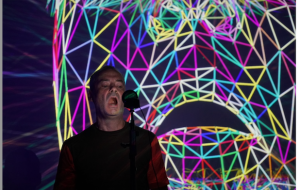
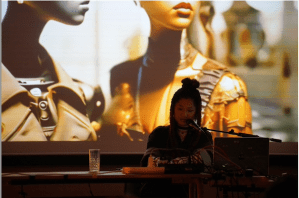
We produced two academic papers on the RRI value of using low-resource AI models and small datasets of music, and launched a policy paper to inform government policy and regulatory strategy around AI in music making and the creative industries more broadly. We also commissioned three artistic mini-projects to raise awareness of the bias inherent in mainstream AI models by creating music in genres marginalised by such systems. A hybrid public launch event for these mini-projects took place in London featuring music and Q&A with the artists (https://musicrai.org).
To pragmatically respond to the challenge of finding more inclusive and responsible AI models we developed an open repository of generative AI models for music. This aims to promote more inclusive access to, and use of, low-resource AI models and links to open-access, non-profit archival repositories and AI models which are mostly excluded from other listings (https://modelexplorer.musicrai.org).