
 Education
 International Partnership
Nora McIntyre, Sebastian Stein, Judy van Biljon, Adele Botha, Teresa Cerrato-Pargman, Richard Marrett, Raissa Malu, Zhaoxing Li, Indu Bodala, Etienne van der Poel, Mac van der Merwe, Bester Chimbo, Ronell van der Merwe, Junaid Mubeen, Wangeci Thuo, Ruth Mghoi, Obadiah Biwot, Sarah Hawkes
Nora McIntyre


The project focuses attention on a population that is vast on a global scale, yet is often left behind: namely, online learners in Sub-Saharan Africa (SSA). The FATES of Africa International Partnership set out to develop a ‘how-to’ pipeline for protecting and championing responsible AI among SSA online learners: from the conception of an online learning idea, through iterative design and development, until the moment of scale.
Working with Whizz Education UK & Kenya, Investing In People, DRC, University of South Africa (UNISA), Council for Scientific and Industrial Research (CSIR) South Africa, and Stockholm University, we co-developed the consultation key areas and protocol for implementation across Sub-Saharan Africa. We then started public consultations in-person within Kenya, East Africa: there, we began with students themselves, to ensure our intended key areas and the sketch of our public consultation was valid and relevant. We then delivered, mostly remote, consultations with educators and community members, then with policymakers and academics, across East Africa, West Africa, Central Africa, and Southern Africa.
The FATES of Africa Toolkit will be launched asynchronously on the web at the end of 2025.
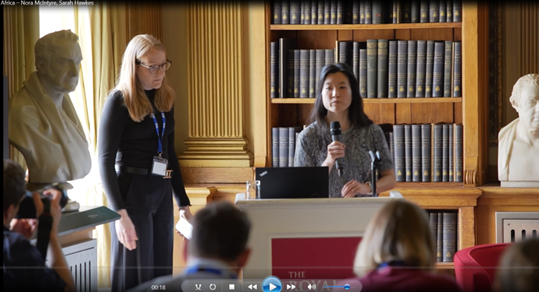
The RAi FATES of Africa partnership has expanded dramatically and contributed prolifically. We have delivered Keynotes at relevant venues including the UN Headquarters for Africa; two symposia at high-profile international peer-reviewed conferences (CIES; ECER); submitted two grant applications for follow-up activity (FCDO; British Academy); and two exchanges with Rhodes University—one in Eastern Cape South Africa, then one in Southampton itself. Meanwhile, academic publications are multiple and in preparation. The FATES of Africa Toolkit will be launched asynchronously on the web at the end of 2025.
The project has co-developed a culturally sensitive and responsible AI framework for online learning platforms. This innovative approach directly tackles the risk of digital inequality, ensuring AI systems are designed not just for but with the specific needs and contexts of sub-Saharan African students.
Key impacts include:
The project’s impact is demonstrated through its key activities:
The project’s public-facing activities, such as workshops and posters, help disseminate its findings and raise awareness about the importance of responsible AI development in a global context.

Join us as an official partner if your organisation is interested in Responsible AI research, innovation and skills. We are looking for partners including businesses, funders, charities, creative organisations, industry associations, think tanks and more. Find out more and sign up
RAi UK will store your data in accordance with the General Data Protection Regulation 2017 (GDPR). We will not share your data with any third parties and you are given opportunities to unsubscribe at any time within the electronic communications you receive, or by emailing info@rai.ac.uk