
 Cultural and Creative Industries
 International Partnership
Nick Bryan-Kinns, Rebecca Fiebrink, Elizabeth Wilson, Phoenix Parry, Zijin Li, Nuno Correia, Alex Lerch, Sid Fels, Gabriel Vigliensoni, Andrei Coronel, Rafael Alampay, Rikard Lindell
Nick Bryan-Kinns

This project aimed to establish an international community dedicated to address Responsible AI challenges, specifically addressing bias in AI music generation and analysis. The prevalent dependence on large training datasets in deep learning often results in AI models biased towards Western classical and pop music, marginalising other genres. The project brought together an international and interdisciplinary team of researchers, musicians, and industry experts to develop AI tools, expertise, and datasets aimed at enhancing access to marginalised music genres. This offered direct benefit to both musicians and audiences, engaging them to explore a broader spectrum of musical styles. Additionally, this initiative contributed to the evolution of creative industries by introducing novel forms of music consumption.
Working with Music Hackspace UK, DAACI UK, Steinberg Germany and Bela UK.
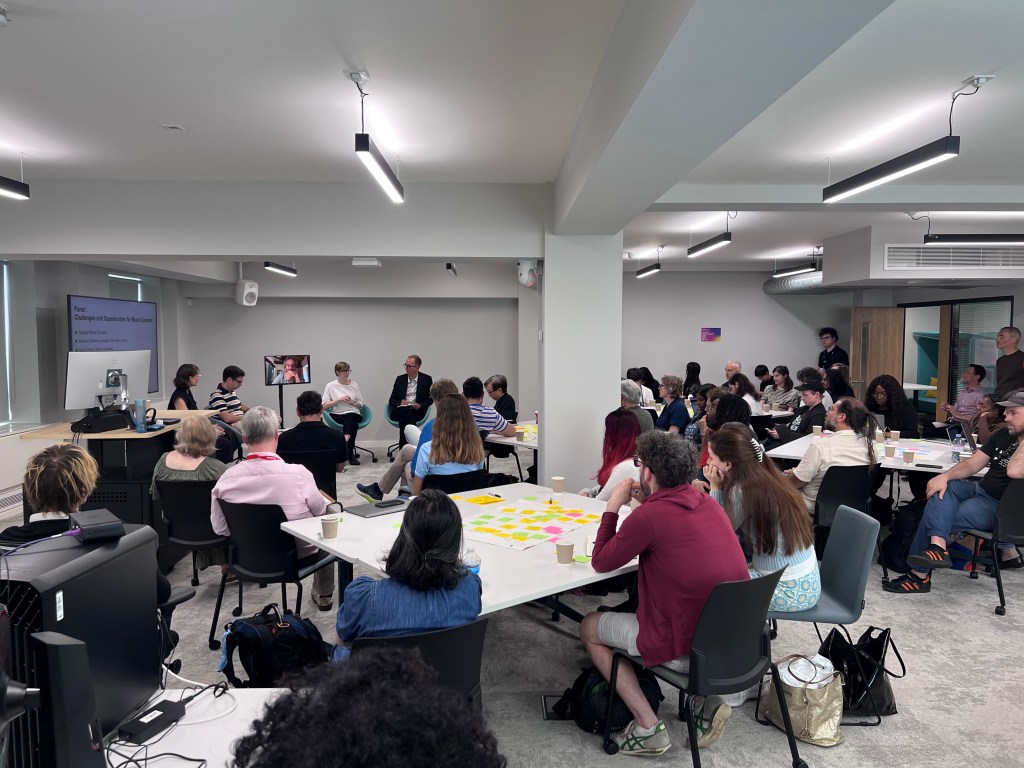
This workshop, held 17 July 2024, at Creative Computing Institute, University of the Arts London, Holborn, London, brought together over 100 people to form an interdisciplinary community of musicians, academics, and stakeholders to collaboratively identify the potential and challenges for using low-resource models and small datasets in musical practice. The workshop consisted of publicly streamed discussion panels, presentations of participants’ work, and brainstorming sessions on the future of AI and marginalised music. The event was followed by an evening reception featuring live performances using AI and small datasets of music. The team gathered ideas on how AI can be used more responsibly in music-making.
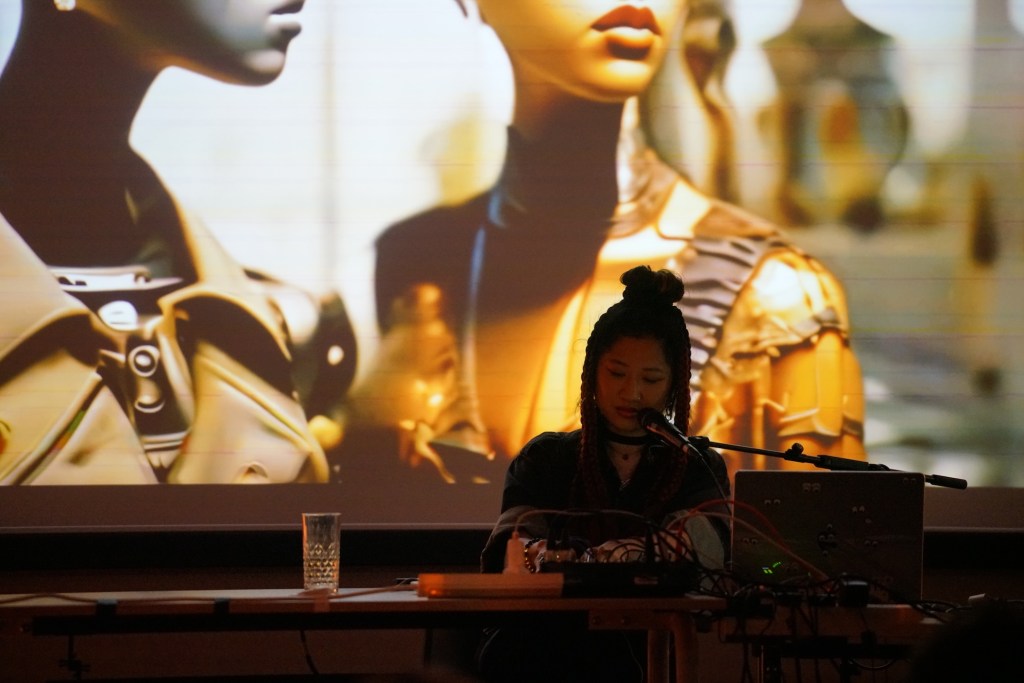
To show how bias in AI affects music and how it can be addressed, three artistic mini-projects were commissioned. These were showcased at a hybrid launch event in London with over 140 attendees. The mini-projects use AI tools such as low-resource AI models with small datasets to showcase the challenges of bias in AI and how RAI techniques can be used to address them.
A recording of the launch event including artists talks and Q&A is available on YouTube: https://www.youtube.com/live/egzcbKAarZg
One major problem is that responsible AI models for music are hard to find and often difficult to use. To help, the team created an online library of open and low-resource AI models – AI Music Generation – Model Explorer, launched 1 July 2025. The Model Explorer now attracts over 86,000 visitors in a month.
The team also published a policy paper with expert input, highlighting ethical concerns and offering practical recommendations – Bringing People into AI: ethical approaches to small datasets and low resource AI models in arts and sciences. This report builds on a series of stakeholder workshops undertaken in the project with Creative Industry professionals and practitioners who identified concerns with the use of AI and ways forward for the legislation in this area. With expert input, this report identifies key issues of using large AI models, highlights ethical and creative concerns, and proposes approaches to address these concerns. The report concludes that a small dataset and low-resource AI approach can bring nuance and character into AI-mediated creative practice while allowing creators more control and recognition for their work. This topic is especially timely as AI researchers and creative practitioners are pushing back against the UK Government’s proposed changes to Copyright Law in 2025 to allow for AI model training using copyrighted creative output.
Landscape mapping and in-depth analysis of data collected in the project about the value of low-resource AI and small datasets for responsible AI were published in leading AI music conferences. The results of this project will directly benefit musicians and audiences engaging with a wider range of musical genres and benefits creative industries by offering new forms of music consumption.

A thesis submitted in partial fulfilment for the degree of Master of Fine Arts, Herb Alpert School of Music, Music Technology: Interaction, Intelligence & Design, 2025, acknowledging support from the Music RAI Artistic Mini-Projects call.
Generative AI is rapidly both changing and shifting aesthetic approaches to various art forms such as visual and sonic art including installations and performances. However, the speed of that the new technical achievements are introduced is being accelerated, so that the artists who have been
using digital medium are likely to miss enough time to adapt their artistic decision process and workflows even if they want to move forward to the new realm. Therefore, the most backlashes to ‘AI art’ are caused by lack of understanding artistic contexts using technical aspects and low qualities by massive product style image dumps on social media platforms. This research will explore the usages of machine learning to bridge the gap between human and machine in terms of perceptions and expression, examining the integration of human creativity and how AI assists to overcome the accusatory technical and moral perspective viewing artworks.





RAi UK will store your data in accordance with the General Data Protection Regulation 2017 (GDPR). We will not share your data with any third parties and you are given opportunities to unsubscribe at any time within the electronic communications you receive, or by emailing info@rai.ac.uk